Cafe Equipment ROI Calculator: Is That $20k Machine Worth It?
Calculate the return on investment for commercial espresso machines. Ryan, VP of Operations at Complete Coffee Solutions, breaks down profit margins per cup and labour savings.
“Ryan, I am looking at this $20,000 price tag and my heart is racing. Is it really going to pay for itself, or am I just buying an expensive trophy?”
We have had this conversation in kitchenettes in Hamilton and boardrooms in downtown Toronto. When you are starting out, or looking to upgrade, every dollar counts. But to manage a profitable cafe, you need to shift your mindset from “Purchase Price” to “Operational Reality.”
The three main points of consideration for any equipment purchase are: Waste, Output, and Skills.
1. Waste: The Silent Profit Killer
In our experience auditing cafes across Southern Ontario, we find that the average shop wastes 10-15% of its milk and 5-8% of its coffee beans.
- The Cause: Manual over-pouring, purging steam wands, and “dialling in” grinders throughout the day.
- The Cost: If you spend $4,000/month on milk and beans, that’s $400-$600 pouring down the drain every month. That is $6,000 a year, enough to lease a premium machine.
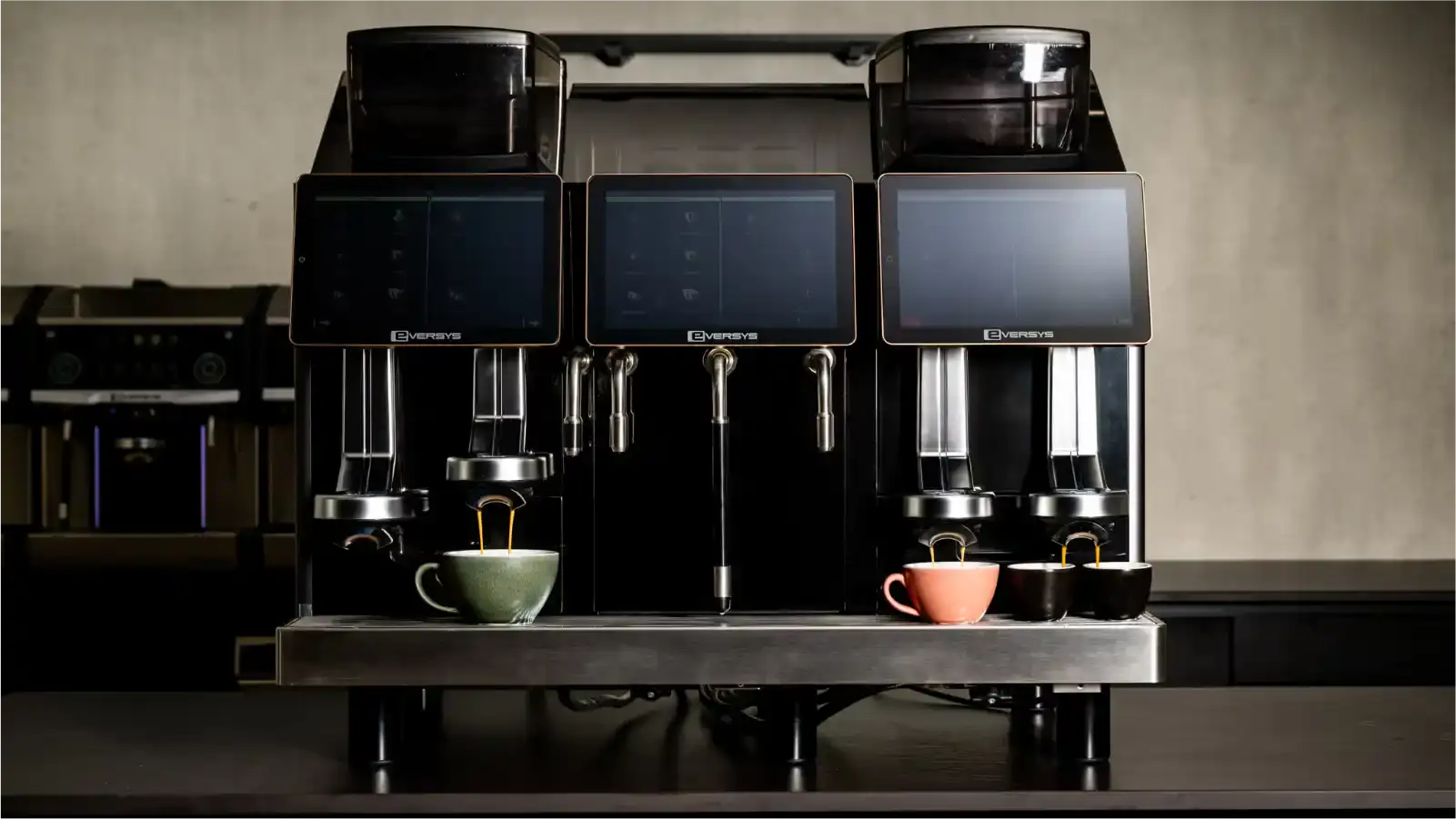
- The Fix: Equipment with volumetric dosing (for espresso) and automated milk texturing (like the Eversys or high-end traditional machines) eliminates this variance. The machine dispenses exactly what the recipe calls for, every single time.
2. Output: Speed = Revenue
Rent is a fixed cost. It costs the same whether you serve 10 customers or 100. The only way to increase profit is to increase throughput during peak hours.
If your current setup limits your barista to making 45 drinks per hour, and your line is 20 people deep at 8:30 AM, you are losing money. Customers will see the line and walk out.
- Scenario A (Standard Gear): 45 drinks/hour -> $270 revenue/hour.
- Scenario B (High-Efficiency Gear): 75 drinks/hour -> $450 revenue/hour.
An extra $180/hour during just the 2-hour morning rush is $360/day. That is over $100,000 in additional annual revenue potential simply by removing the bottleneck.
3. Skills: Labour & Training
Specialized labour is hard to find and harder to keep.
If your equipment requires a master barista to operate it, your business is vulnerable. If that barista calls in sick or quits, your quality tanks.
Modern equipment, with features like Gravimetric Dosing (Grind-by-Weight) and Easy-Steam Wands, lowers the barrier to entry.
- Training Time: Reduces from weeks to days.
- Consistency: A junior barista can produce the same quality latte as your head barista.
- Labour Cost: You can operate with a leaner team because the workflow is faster and less physical.
4. Reliability: Built to Last
Downtime is the silent killer of cafe profitability. A week without your espresso machine bleeds thousands in lost revenue and damages your reputation with regulars.
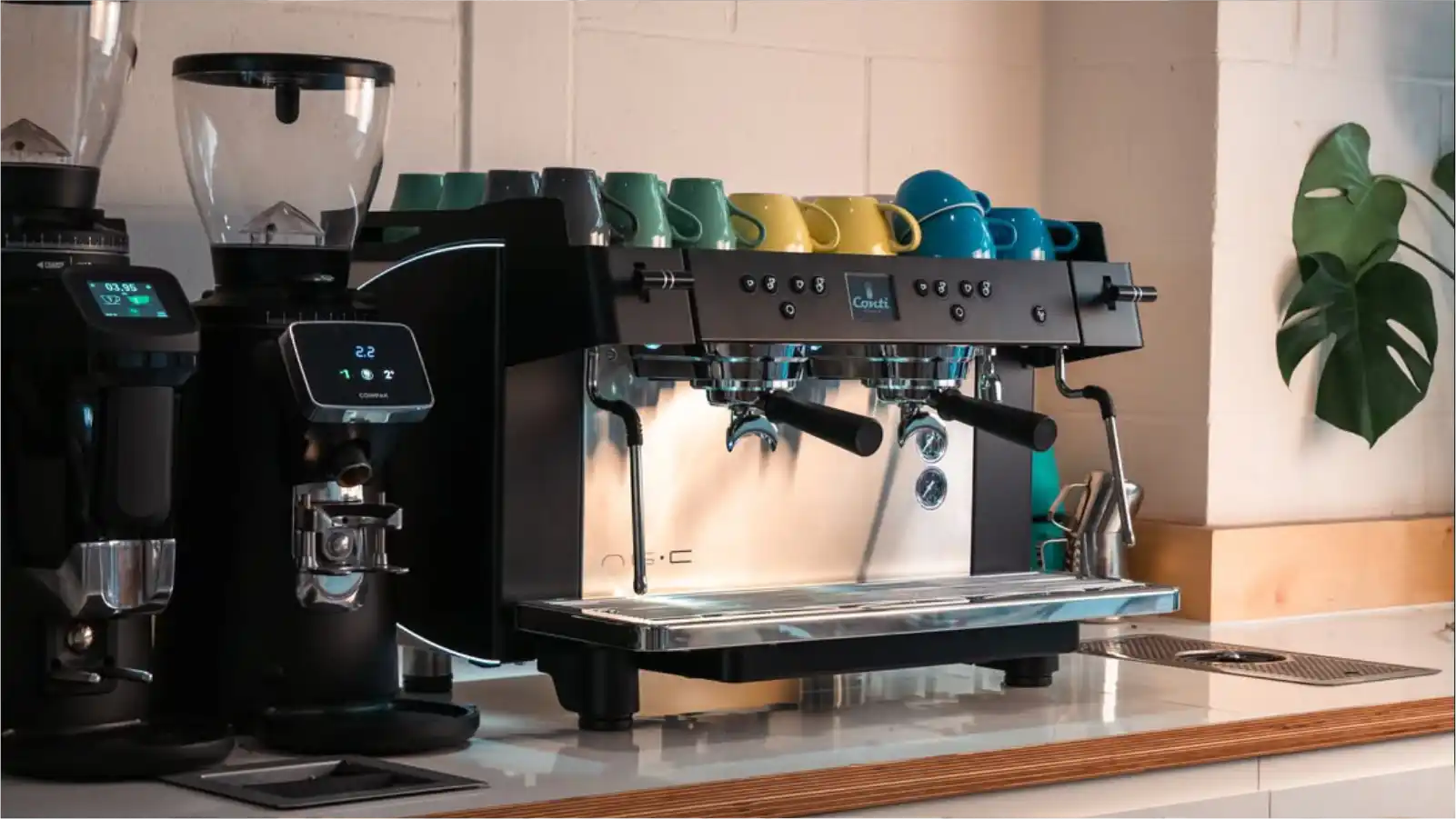
Handmade machines like Conti espresso machines are built with many of their internal parts manufactured specially in-house. They are rock solid and built to last, designed to hold up under years of heavy daily use.
Machines like Eversys take a different approach with highly modular engineering, where key components can be swapped on-site rather than sending the entire unit to a repair bench. This means faster repairs and less time offline.
- Conti: Handcrafted durability with in-house manufactured components for long-term reliability.
- Eversys: Modular design for rapid on-site maintenance and minimal downtime.
- The Bottom Line: Investing in reliable equipment means fewer service calls, less downtime, and more consistent revenue.
Rent-to-Own: The Smart Cash Flow Move
“But Ryan, I don’t have $25,000 cash to drop on a machine right now.”
You shouldn’t. In fact, most successful businesses in the GTA don’t.
We partner with Econolease to offer flexible rent-to-buy options. Here is why this model works for cafe owners:
- Preserve Working Capital: Keep your cash in the bank for rent, payroll, and marketing. Use the machine’s revenue to pay for the machine.
- Tax Advantages: Lease payments are often 100% tax-deductible as an operating expense (check with your accountant).
- Profit from Day 1:
- Monthly Lease Cost: ~$500
- Monthly Extra Revenue (from speed/quality): ~$2,000+
- Net Result: You are cash-flow positive immediately.
Summary
Don’t just buy a machine based on how it looks on the counter. Build a business case. If you invest in equipment that reduces waste, increases speed, and simplifies training, the ROI isn’t just a calculation. It’s the foundation of your business growth.
Want to run the numbers for your specific location? Contact me for a custom ROI analysis. We’ll plug in your rent, labour costs, and menu pricing to see exactly which setup makes financial sense for you.
Executive Takeaway
Investing in high-end coffee equipment is a strategic decision that impacts labour costs and customer retention. A machine that increases speed by 50% can save a business upwards of $15,000 annually in labour, effectively paying for itself within 18 months while ensuring the quality consistency needed to dominate local markets like the GTA.
Ryan
VP of Operations and Head of SalesRyan serves as the VP of Operations and Head of Sales at Complete Coffee Solutions. Bringing more than 14 years of executive experience in the coffee equipment sector, he oversees national operations and strategic sales growth across Canada. Ryan is a specialist in ROI modeling and high-efficiency workflow design, helping business owners maximize their operational potential.